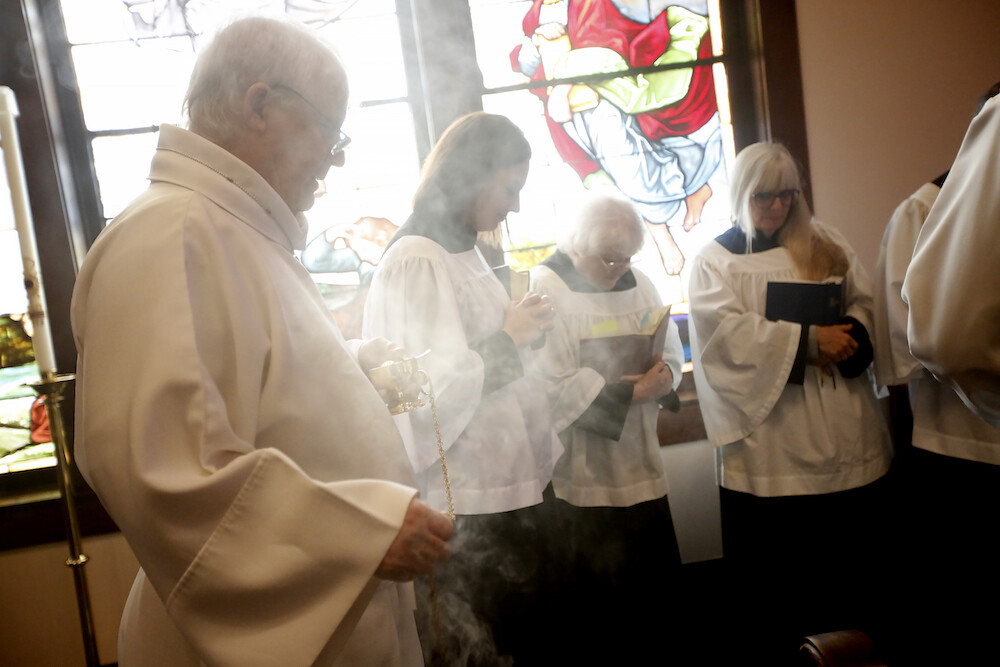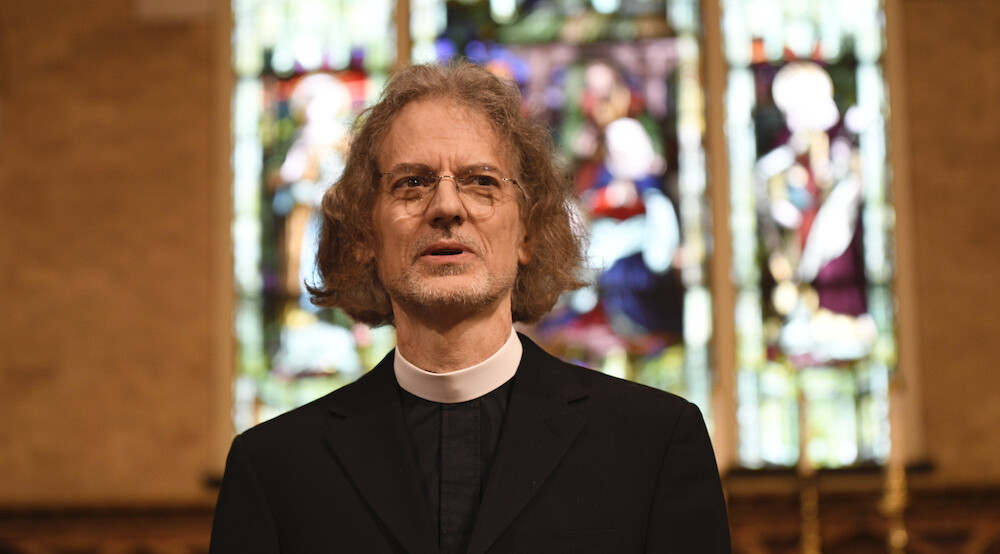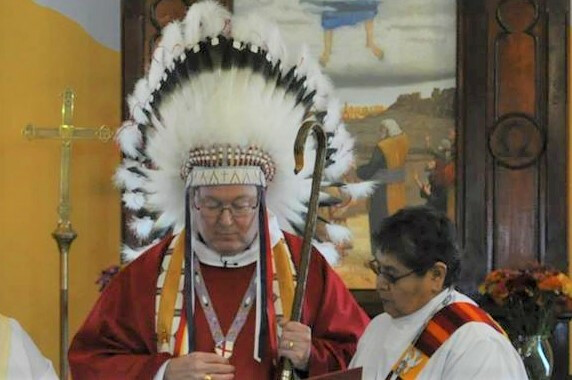

The 74 churches and 20 schools of the Episcopal Diocese of Dallas focus on the spiritual health of lay people, clergy, students, faculty and staff members. They bring people to Jesus Christ via cooperation and an emphasis on mission.
Growth is the norm in our churches. The Episcopal Diocese of Dallas plans to plant 10 congregations within the next five years and increase its foreign mission involvement.
Developing leaders is important to the Episcopal Diocese of Dallas. Within the past six years the diocese has increased its youth ministers fivefold and is developing a premier camp and conference center at Lake Texoma.
The staff at Diocesan House is a resource to the congregations of the diocese. Demographic information for specific neighborhoods is available for churches to use to help them bring people to Jesus Christ.
To help parishes plan their events, a master diocesan calendar, an extended diocesan calendar, and a parish calendar are available.


EVANGELISM: Our call, our mission, our purpose
The Diocese of Dallas' Evangelism Initiative sponsors clergy and lay conferences that focus on helping parishes engage in evangelism and feature the following three groups:

Breaking News
Breaking News, by J. John is a six-part Bible Study designed to equip congregations for evangelism.

Alpha
Alpha helps congregations familiarize themselves further with the Christian faith and provides them with a tool they can use with non-Christians who are interested in exploring faith questions. It meets once a week over a 10-week period in a low-key, relaxed setting that creates a safe environment for seekers to ask questions about God and faith.

Harvest Unlimited
Harvest Unlimited teaches congregations how to contact their neighbors and invite them to church, using the telephone, and it provides all of the demographics by zip code. This ministry has proven highly effective throughout the U.S. It not only brings in many new families, but it also infuses the parish with new life.

For more information about any of the above opportunities, contact Carrie Boren (214-826-8310 or cboren@episcopal-dallas.org

For other evangelism events, click here.

New feature: "A word on the Word," click here.


Do you think turmoil in the Church is new? Think again and click here.

For the most recent Executive Council minutes, click here.

“God’s blessed us every one.” Pass it on.

ll of us have been there one time or another, perhaps perennially, in the Christmas season: at our wit’s end, trying to find a suitable gift for that hard-to-buy-for someone on our lists. Usually that person has need of nothing material we can offer, yet we feel the need to give something, usually because that person has gifted us with something special — most likely a relationship itself. So we burden our brains, throwing our imagination and energy into holiday high gear to deliver something that represents the value we place on
that friend.

Would that we might do the same for the Giver who is the Gift, for which we celebrate Christmas: God with us. Incarnate. Fully human. Fully divine. For no other reason than love and relationship. With the birth of Christ, God gave his Best and His Beloved. Indeed, He gave us Himself.

Like the little drummer boy of the popular carol, we have “no gift to bring that’s worthy of a king.” What can we give to the Creator of everything? Nothing that is not already His. But our God is not offended by a regift. We give Him back what He gave us: Love. And through His Son, whose earthly birth and life we celebrate this month, we learn just how to do it.

Love God with all of our hearts, souls, minds, and strength. Love our neighbors as ourselves (Matt. 22:36-40). Who might those neighbors be? Matt. 25:35 gives us good examples.

Some assembly IS required. For that, we look to the community of faith — the body of Christ gathered not just to worship in a structure on Sunday morning, but to show the doorway to God’s expansive love. We must reach out. Members of the Diocese of Dallas do this all over for people in all places and circumstances — from sheltering the homeless to feeding neighbors from a community garden; from hospital to hospice care to mentoring children of the incarcerated; and from simply saving box tops/labels for education to tutoring at-risk neighborhood children and making sure they have the same supplies as their more fortunate schoolmates.

And now as we close out this year, the diocese has a new resource that individuals and parishes can access for ideas, assistance, encouragement, and training that can make us doers, not just hearers, of the Word. In the development stages for months, the Episcopal Community Services Network (ECSN) was presented at the convention. A brainchild of the Executive Council, the network will help diocesan churches with outreach to those in their communities who live on the margins of society where social service cracks are big enough to consume them.

In his address at convention, Bishop Lambert laid out some ambitious tasks for the ECSN. Among them:
• Encouraging cooperation between congregations to assess and address the needs in each community where Episcopalians worship. This could mean anything from providing information and proven successful experience to connecting congregations with each other to plan and develop outreach projects. Bishop Lambert is fond of saying, “Many hands make light work.” Many hands also can reach more people. Small parishes can band together to do something in big (numbers) and/or meaningful (impact) ways.
• Appointing Dabney Dwyer as executive director of ECSN. Those who have worked for any length of time in outreach recognize Ms. Dwyer’s name. She knows how to resource, develop, and encourage.

Beyond Ms. Dwyer, congregations will connect with other congregations already engaged in external ministries that can provide expertise, education, and encouragement — whether these churches are planning to implement programs they will do themselves or in concert with other denominations. Remember that God doesn’t care who gets the credit. He cares who cares.

In his convention address, Bishop Lambert noted the benefits of external focus — outreach is a gift that gives back.Congregations that serve beyond their doors are churches that put feet on their prayers. “The more we are engaged in our communities, the stronger our communities of faith become spiritually (because we are living into our baptismal covenant of faith) and in our growth, because people will be drawninto our community because of our good work,” Bishop Lambert said.

Here are some ideas for congregations to think about in this season of giving:

• Provide an angel tree for children of a local nonprofit.
• Donate money, food, or time at a local food bank.
• Invite neighbors in your surrounding community in for a coffee and donuts.
• Consider alternative gift giving to international organizations, such as Heifer Project, or to a local nonprofit that is in need of assistance.
• Identify neighbors in need of food and donate holiday food/gift bags.
• Take youth volunteers to provide a holiday party at a nursing home.
• Some prison ministries accept donations to prepare gifts for the incarcerated. Check with local institutions for resources.

“Yes, outreach is evangelism and evangelism is outreach. Being engaged in our communities allows us to witness to the transforming power of Jesus Christ in our lives,” he continued. “We go into the world not because it’s a good thing to do alone, but primarily because our Lord Jesus Christ calls us into the world to bring Good News. … As we share our faith with one another and those outside of our communities, our lives are transformed by the power of Jesus Christ as well. We must have church-growth eyes, and see the needs before us and endeavor to fill them. We cannot do this on our own but by the grace of God in Jesus Christ in the power of the Holy Spirit.”

After his transformation, old Ebenezer Scrooge committed to keeping Christmas in his heart every day, not just in the holiday season.

To borrow a phrase from Madison Avenue, this is the kind of “gift that keeps on giving.” And it honors the Original Giver and the Gift.


NEW 2008
Diocesan report
Randy Sams' Outreach
Shelter
Rural Church Commission
Youth ministry
All Saints Camp
Parish Nurse ministry
Canterbury college ministry
Diocesan Habitat ministry
Kairos prison ministry
Evangelism
Church planting
Missions-
Christian Education —
Canterbury school
Trinity Hillcrest multi-ethnic
ministry
Resolutions passed (113th
convention)
2008 Convention election
results
Constitution and Canons
(revised 10/2008)


All Saints Camp
All Saints Camp invites all clergy, youth ministers, and anyone else who works with diocesan youth to a free "Leap of Faith" day from 10 a.m. to 3 p.m. on Dec. 4. We will spend the day zipping down the line, jumping from the Leap of Faith pole, and traversing the cargo net 50 feet in the air — free lunch too! RSVP to the camp (903-786-3148) or
Pam Dunbar (pdunbar@episcopal-dallas.org).

Plan ahead for Summer Camp 2009. All Saints expects a sell-out this summer and has limited each age group to a single week! You can make deposits on-line! Come for a tour or stay for the
night. Contact Christine Tokarz,
executive director (Ctokarz@allsaintstexoma.org).

EPISCOPOSSE 2009
The college roundup at All Saints that takes place Jan. 2 – 4, is for all college students in the Dallas area, even if they’re not Episcopalians. The diocese is offering Episcoposse as an opportunity for college students to recharge their spiritual batteries, discuss the challenges to following Christ in college, reconnect with other college students, check out All Saints Camp, and explore opportunities to serve God at camp this summer. Food, lodging, and program are free. All Saints Camp is located at 418 Stanton Way, Pottsboro. Sign up for Episcoposse and get your friends to sign up too! (www.allsaintstexoma.org). For more information, contact Nate Bostian (nbostian@smu.edu or 214-505-9859) or Gareth Kalfas (garethkalfas@gmail.com or 716-397-8986).


What are the Anglican Communion and the Covenant — and why
should I care?

o you know anything about the Anglican Communion and the Covenant that it is developing for approval by members of the Anglican Communion (which includes your Episcopal church)? You may be like many Episcopalians who are deeply involved with their local church and don’t know much about the Episcopal or Anglican structures beyond their local congregation. Then, it’s hard enough for you to know or care about what is going on in the national Episcopal Church, let alone in an international organization of which you may know very little. But it is important for everyone in the Episcopal Church to know about the Communion and the Covenant because it affects you, and here’s why.

What is the Anglican Communion?
The Episcopal Church is a member of the Anglican Communion. These churches around the world trace their spiritual lineage through the Church of England to the church of the New Testament. It came into existence largely through the reformation of the Churches of Ireland and Scotland and the independence of the United States resulting from the American Revolution.
                 
“In 1851, churches of Anglican lineage and theological interest first used the term, ‘Anglican Communion,’ out of a desire for association and some sense of unity. The purpose of the Communion is to reflect the fellowship we share theologically and historically with our brothers and sisters around the world. Today there are 75 million members of the Communion located in 134 countries around the world. These independent churches recognize the leadership of the Archbishop of Canterbury and are "in communion" with their sister churches around the world. The opening paragraph of our Episcopal Constitutions and Canons testifies to our connection with this fellowship. It reads, "The Protestant Episcopal Church in the United States of America … is a constituent member of the Anglican Communion, Fellowship within the One, Holy Catholic, and Apostolic Church." We should remember however, that we in the Episcopal Church are a very small part, comprising about 3 percent (2.5 million) of the total number of Anglicans worldwide” (click here for the full text of “What is the Anglican Communion? Why does it matter?” by the
Rev. Chris Findley, vicar of St. Francis Church, Madison, TN).

What is the Covenant and why does it matter?
In 2003, the Episcopal Church consecrated an openly gay bishop, an action that the primates (heads of the various national churches) of the Anglican Communion had argued against. They had declared that this action would “tear the fabric of the Communion at its deepest level,” and this is what happened as some of the provinces declared themselves out of communion with various parts of the Episcopal Church. Many faithful members of the Communion were bewildered by the intensity of the opposing views on issues of sexuality. This group included worshippers who yearned for expressions of communion that would provide stability and encouragement. At times, they have felt their voices eclipsed by the intensity of sounds on opposing sides of the debate.

Therefore, at the request of the Anglican Communion Primates , the Archbishop of Canterbury formed the Lambeth Commission that created The Windsor Report (TWR), a document that made recommendations for a way to encourage communion within the Anglican Communion. One of the report’s main recommendations was the development and adoption of an Anglican Covenant that would give explicit articulation and recognition to the principles of co-operation and interdependence (sometimes called “the bonds of affection”) which hold the Anglican Communion together. TWR considered that this was one vital way to rebuild trust and co-operation between the churches of the Anglican Communion in the wake of recent tensions. The plan is that only those provinces that sign the covenant will be constituent members of the Anglican Communion.

Regarding the Episcopal Church and the Diocese of New Westminster in the Anglican Church of Canada (that unilaterally affirmed the blessing of same-sex marriages), paragraph 157 of TRW reads,

“There remains a very real danger that we will not choose to walk together. Should the call to halt and find ways of continuing in our present communion not be heeded, then we shall have to begin to learn to walk apart. We would much rather not speculate on actions that might need to be taken if, after acceptance by the primates, our recommendations are not implemented. However, we note that there are, in any human dispute, courses that may be followed: processes of mediation and arbitration; non-invitation to relevant representative bodies and meetings; invitation, but to observer status only; and, as an absolute last resort, withdrawal from membership. We earnestly hope that none of these will prove necessary. Our aim throughout has been to work not for division but for healing and restoration.”

Why does membership in the Anglican Communion matter?
“It is the Anglican Communion that intimately connects us to the One, Holy, Catholic, and Apostolic Church — for the Communion, at its heart, is a theological communion. It professes that we not only trace our heritage from these particular beginnings; we also hold these things as necessary and valuable. The preamble of our constitution (quoted above) also goes on to say that the Church participates in the Communion by having ‘duly constituted dioceses, provinces, and regional churches, in communion with the See of Canterbury, upholding the historic faith and order as set forth in The Book of Common Prayer" (Findley).

For more information, go to the following:

The official website of the Anglican Communion
A description of the Covenant
The most recent draft of the Covenant
A discussion of the covenant

The January/February issue of Esprit will carry several articles about the Covenant and its importance.

 
December 9

Christopher Wells talk on Aquinas
6 p.m. at St. Matthew’s (5100 Ross Ave., Dallas). Contact the church (214-823-8134).

December 13

Deacons’ meeting
12 p.m. at diocesan office (1630 N. Garrett Ave., Dallas). Contact the diocesan office (214-826-8310).

December 13

Ordination to diaconate of Nate Bostian and Janice Auch
10 a.m. at St. Matthew's (5100 Ross Ave., Dallas). Contact the diocesan offices (214-826-8310).

December 14

Lessons and Carols
at Annunciation (602 N. Old Orchard Ln., Lewisville). Contact the church (972-221-3531).

December
20 – 21
Crèche Sunday
at Transfiguration (14115 Hillcrest Rd., Dallas). Contact the church (972-233-1898).
December 21
Lessons and Carols
at Incarnation (3966 McKinney Ave., Dallas). Contact the church (214-521-5101).
December 20

Labyrinth ministry
7 – 8 p.m. at Transfiguration (14115 Hillcrest Rd., Dallas). Contact the church (972-233-1898).

December 31
Labyrinth walk
at St. Thomas (6525 Inwood Rd., Dallas) Contact the Rev. Christianne McKee (c.l.mckee@sbcglobal.net).


Copyright © 2005 The Episcopal Diocese of Dallas. All rights reserved.
1630 N. Garrett Ave. Dallas, TX 75206  (214) 826-8310
Website by Visual Release.